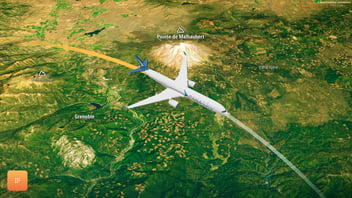
Seatback screens are gaining ground as airlines look to meet evolving passenger expectations. While some companies began removing in-flight entertainment (IFE) channels under the assumption that personal mobile devices would pick up the slack, data tells a different story. On average, seatback screens add between 60 and 90 points of customer satisfaction on a scale of 1,000 — a significant lift that can influence booking decisions and repeat flights.
Seatback screens improve the passenger digital experience, but historically have been slow to change. Innovation and advancements, however, now let airlines refresh and tailor screen content as quickly as they can update a landing page or mobile app.
Panasonic Avionics' Modular Interactive (MI) platform brings seatback screens up to speed, providing a competitive edge in a market where every distinction counts.
How the traditional IFE model is showing its age
Prioritizing the new era of seatback screens is crucial to optimizing the passenger experience. Carriers using traditional IFE architecture are at risk of getting left behind. While seatback screens remain a popular way for passengers to watch movies or check the map, many feature outdated interfaces that respond slowly and display ads that are weeks or months out of date.
"In legacy systems, it requires a lot more time to get this software and content released," says Emon Rafizadeh, Director of Product Management at Panasonic Avionics Corporation. "You have to put in a change request, there's a cost associated with it, and there's a lead time. Afterwards, it could take three to six months to load a full fleet with software."
For passengers, IFE that doesn't work or is nonexistent isn't necessarily critical, but it can be disappointing or annoying. If they're prepared with downloaded or offline content, they can simply pull out a mobile phone, laptop, or even a book and ignore the seatback system. But for airlines, this is a missed marketing opportunity to connect with customers, offer upgraded services, or show ads that promote destination events.
Common challenges in the traditional IFE model include:
- The update cycle is too slow.
- The cost structure works against airlines. Custom seatback graphical user interfaces (GUIs) are expensive to design and resource-intensive to update over time. While traditional systems continue to provide reliable core entertainment, keeping up with rapid trends requires significant ongoing investment. Modern digital solutions help bridge this gap, giving airlines a faster, more flexible way to manage and expand their existing IFE capabilities.
- Competition is moving. P
While it's possible to build and update custom IFEs using traditional design frameworks, the process is time- and resource-intensive. Changes have to be planned 6 to 12 months in advance, which doesn't deliver the timely, personalized experience passengers expect.
assengers expect IFE to deliver an experience comparable to that of personal mobile devices. This means apps and screens that are regularly updated and that present contextually relevant information.
Modular Interactive architecture offers a new IFE approach for airlines. Instead of building and deploying costly software updates, carriers can create and push customized content to seatbacks on-demand.
The rise of Modular Interactive
Panasonic's Modular Interactive offers a way for airlines to push new content without updating core seatback software. Carriers including Azerbaijan Airlines, Riyadh Air, Saudia, and EgyptAir have made the switch to MI, and according to Rafizadeh, 20 more airlines are rolling out MI through 2027.
Modular Interactive is a customizable authoring and publishing platform built for IFE. Instead of treating seatback interactive as a piece of software to be developed, delivered, and replaced, Panasonic's solution is designed as a continually evolving experience that can be directly controlled by airlines.
This allows the creation of end-user experiences that are unique to each airline, but are all built on the MI platform. "Each of these airlines, their interactives are completely different," Rafizadeh says. "You can tell from the look and feel that they're unique to the airline. That's the goal we're going for. We didn't want to create a template-based product where everyone looks the same. They can make their Modular Interactive specific to their business model."
What sets Modular Interactive apart
MI is agile by design. It gives airlines the convenience of a common framework but with exceptional customization and control to deliver an innovative ownership experience. Here's how it works.
MI Studio: A self-service design tool for the seatback
The core of the solution is MI Studio. This is a cloud-based design tool that functions like a what-you-see-is-what-you-get builder.
"Airlines UI/UX Designers can edit the seatback interactive through MI Studio and preview it before loading it onto their fleet," Rafizadeh explains. He likens it to a plug-and-play website builder where admins can easily change themes, deploy those themes based on present rules, and preview integrated applications.
"It allows airlines to be much more creative and create a much more personalized experience," he says.
Airlines can design, build, and publish updates entirely on their own, or with Panasonic support, if preferred. In addition, MI Studio includes a live preview and flight event simulator, so teams can validate results before anything reaches the aircraft.
Rules Engine: The key to making experiences dynamic
MI features a Rules Engine that enables dynamic content creation based on a variety of passenger characteristics. Rafizadeh offers a practical example:
"Let's say there's an aircraft flying from New York to Los Angeles for the Coachella Valley Music and Arts Festival, on to Las Vegas for the Formula 1 Las Vegas Grand Prix, and back to New York for the Times Square New Year’s Celebration. As you travel, the cabin's seatback interactive screens dynamically feature immersive themes complete with direct links to book festival tickets, reserve event hotels, and explore curated destination articles for each stop."
The Rules Engine also streamlines the process of creating event-based updates for timely occasions, such as Lunar New Year or Ramadan. For example, EgyptAir used MI to deploy a custom Ramadan-themed experience: a time-sensitive, culturally specific update. Attempting to do the same with standard IFE software could take anywhere from three to six months, making it nearly impossible to create a contextually relevant update that would resonate with passengers. Using MI, EgyptAir was able to quickly create and display Ramadan-themed content and switch it back to normal interactivity the day after Ramadan ended.
The experience can become even more personalized to passengers, highlighting information and experiences based on loyalty tier, cabin class, route, destination, and other contextual factors.
In addition, the Rules Engine enables Airlines to collect and analyze passenger data at scale. Paired with Panasonic's Insights solution, airlines can carry out deep dives into how passengers use seatback IFE and discover new ways to improve the experience.
For example, marketing teams could configure multiple routes slightly differently—such as putting buttons in different places or showing ads at different times—to see which format works best. They can also conduct simultaneous A/B campaigns to fine-tune advertising efforts.
Fast-tracked certification: Built-in compliance and qualification
MI is pre-tested and pre-integrated within the Panasonic Avionics ecosystem. This means airlines are not starting from zero each time they make a change because the framework has already been qualified.
Instead of rebuilding the software from scratch when the seatback IFE becomes too dated, airlines can simply push new content and designs directly to in-flight screens. This means updates that would typically require months of acceptance test procedures (ATPs) can move through the process far more quickly.
Ecosystem integration: Direct connection to Panasonic’s digital suite
MI is built directly into the Panasonic ecosystem, with native support for Astrova’s 4K OLED monitors and full compatibility with eX3 V3 monitors and newer. It also integrates seamlessly with platforms like Arc, Marketplace, OneMedia, and Panasonic’s next‑generation eXNeo system. This gives airlines a unified foundation for adding revenue‑generating features—such as destination guides, partner offers, and dynamic campaigns—without the cost or complexity of bespoke integrations.
Seasonal travel is a perfect example. A winter flight to New York calls for different recommendations, offers, and cultural content than a summer flight. With MI and ecosystem apps, airlines can update seatback campaigns in real time—highlighting what’s happening now, not what was planned six months ago. The result is more relevant content and higher passenger engagement.
Transforming the passenger experience with modular agility
Modular Interactive changes the approach to seatback IFE. Its pre-tested, pre-integrated platform gives airlines control over their content, reduces regulatory requirements, and lowers the total cost of keeping the passenger experience current.
Seatback is back, but passengers want more than static templates and old apps. They expect in-flight experiences that are engaging and dynamic. MI represents a new way to compete on the seatback, allowing airlines to decrease their time-to-market while simultaneously boosting customer satisfaction.
Ready for the next generation of seatback IFE? Take control of real-time content and customization with Modular Interactive.
Modular Interactive FAQs
-
Many airlines began removing seatback IFE but have now pivoted to upgrading this technology as passengers make it clear that seatback experiences increase their overall satisfaction. It's no longer enough to offer static displays and familiar templates — passengers want dynamic content that offers direct value.
-
Traditional IFE interfaces historically require significant time and resources to update after deployment. While it is possible for airlines to change basic components such as text size and font, substantive improvements often require full software upgrades, which in turn need additional FAA testing.
-
Using a modular, cloud-based approach allows teams to design, preview, and push new content directly to seatback IFEs. This content may be event-, route-, or product-related, and the deep customization allows carriers to better connect with passengers during their flights. In addition, a modular approach meets passenger expectations for digital interactions that are timely and relevant.
-
The MI Rules Engine can intelligently adjust content based on specified conditions. For example, a flight from New York to Miami might display South Beach and coastal nightlife, while the return flight might show the Empire State Building and Central Park on its IFE. This allows airlines to provide passengers with localized event details, promotional offers, and direct links to book hotels, tickets, and restaurants, ultimately enhancing the quality of their stay at their destination.